Import images from Dropbox into Marcomm
Connect your Dropbox account, then browse your folders and copy an image into the media library while you write a press release or blog post.
- 1In Marcomm, go to Settings → Integrations → Dropbox and select Connect.
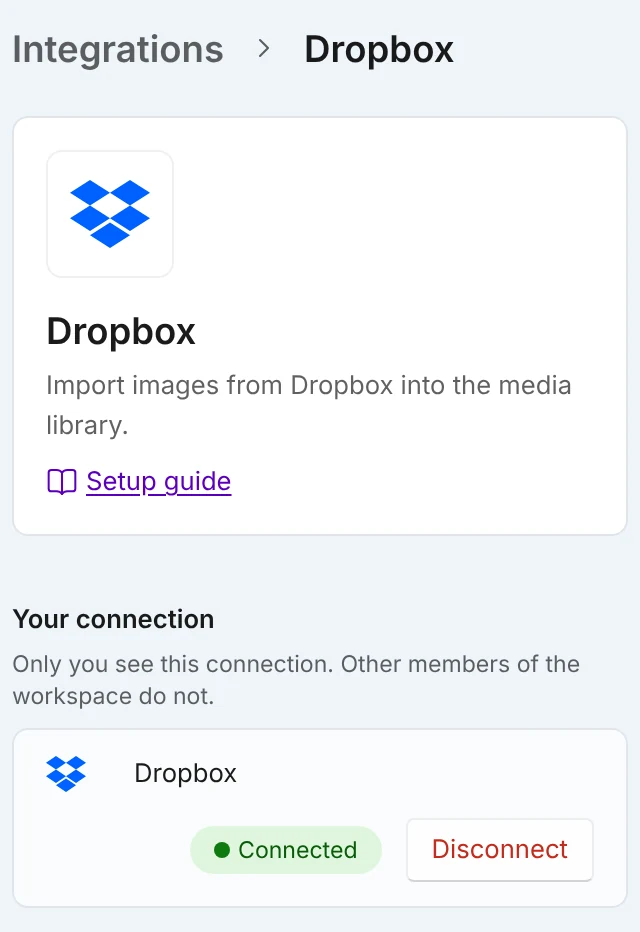
Once connected, the row shows Connected and a Disconnect button. Only you see this connection. - 2Sign in to Dropbox and select Allow.
Dropbox asks to view the files in the Apps › Marcomm AI Works folder and your basic account information. Select Allow. - 3In the press release or blog post editor, open the image picker. In Choose an image, select the Cloud tab.
- 4Under Storage to import from, choose Dropbox, open a folder and select an image.
- 5Marcomm copies the image into the media library and uses it where you were working.
If Dropbox is not connected yet, the Cloud tab shows Connect in Integrations, which opens this page.
Marcomm AI asks only to read your account information and your file names and contents, so you can browse them. Marcomm AI never uploads, changes or deletes anything in Dropbox.
Only folders and images are listed, and each folder shows its first 100 items. One image can be up to 10 MB, and the copy counts toward your workspace storage like any upload.
Each person connects their own account, and only that person sees the connection. To stop, select Disconnect on the same page. Images already copied stay in the media library.
FAQs
No. Only the image you pick is copied, once. Later changes in Dropbox do not reach the copy in the media library.
Wherever Marcomm opens Choose an image, for example in the press release and blog post editors.
Marcomm can only see the Apps › Marcomm AI Works folder in your Dropbox. Dropbox creates it when you connect. Move or copy the images you want to use into that folder, then open the Cloud tab again.